Testing and Prototyping
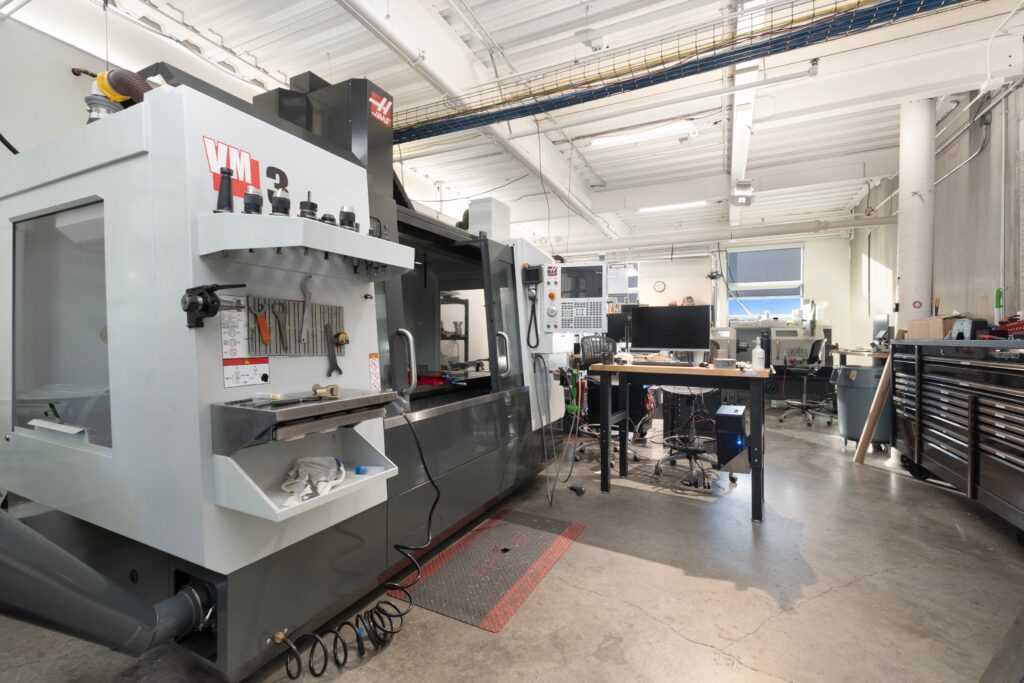
Rapid Prototyping and Applied Engineering Lab (RPL)
Founded in 2019, the RPL designs and builds custom solutions to complex engineering challenges.
The RPL maintains a machine and fabrication shop with capabilities in welding, waterjet, sheet metal work, milling, 3-D printing, and more.
Additionally, the RPL’s staff have experience with data acquisition systems such as LabView, and are available to accelerate the development work of Colorado State University researchers.
The RPL supports cutting-edge research across CSU as well as the broader innovation ecosystem across the county. Contact the RPL directly to see how they can help you.
Equipment & Instrument Core Facility
Housed within the Powerhouse Energy Campus are dozens of engines, dynos, exhaust gas analyzers, generators, load banks, thermal testbeds, and other testing equipment. All of the equipment and analytical instrumentation is available for Colorado State University researchers to use for conducting their research programs.
Equipment and Capabilities
Engines:
- 2G Agenitor 408
- Caterpillar G3304 RB
- Cummins ISB 6.7 D
- Caterpillar 3516J
- Caterpillar CG137-8 RB
- Cooper-Bessemer GMV-4TF
- John Deere 4045 T4 D
- John Deere 6068 T4 D
- Solar Turbine Centaur 40 Genset with 4 MW resistive load bank
- Waukesha F-2 CFR
Test facilities:
- Organic Rankine Cycle test bed, up to 500 kW heat input, HFO refrigerants or HFC
- Vapor Compression Cycle test bed, up to 370 kW cooling output, HFO refrigerants or HFC
- NEL C20 PEM Electrolyzer Bank, capable of 120 kW of hydrogen production
- Aerospace Propulsion and Diagnostics Laboratory, Hypersonic Wind Tunnel
- Integrid Lab
◦ Grid Interconnect 2MVA
◦ Switchgear up to 1300 kW
◦ NG Gensets 170 kW
◦ WT Simulator 125KW
◦ Variable Load bank 400 kW 0.8 PF
Our specific areas of expertise
Industrial Natural Gas and Diesel Engine Testing – Our work is primarily focused on:
- Advanced ignition systems (laser, micropilot, pre-combustion chamber)
- After-treatment (SCR, 3-way catalysts, NSCR, oxidation catalysts)
- Fuel Injection Technology
- Dual fuel engine development
Fuels Analysis and Characterization
- Methane number measurement in CFR engine and fuel blending of alternative fuels
- Liquid fuels analysis: Corrosion, Acid No., Iodine No., Speed of Sound, Flashpoint, Cold Flow Properties, Viscosity, Metals, and Heating Value
- Waukesha FIT Ignition Quality Tester
Air pollution formation and control
Emissions formation in internal combustion engines, two-stroke engines, and engines operating on alternative fuels, including biodiesel. Research methods include:
- Chemical kinetics
- Combustion analysis
- Optical diagnostics
- Computational fluid dynamics
- In-cylinder sampling
Toxic contaminants and hazardous air pollutants (HAPs)
A class of mutagenic and carcinogenic pollutants produced during combustion. We specialize in:
- Measurement
- Experimental Studies
- Analytical / Chemical Kinetic Modeling
- Mitigation
- Legislative Support
Please contact Kirk Evans for more information.